

VO2 Max Testing Brisbane: Why It Matters for Athletic Performance
By Jack McDonagh,
Discover how VO2 max testing can help athletes understand their aerobic fitness, monitor progress and train more effectively.
Whether you are a competitive athlete, recreational runner, cyclist or weekend sports enthusiast, understanding your aerobic fitness can help you make better training decisions. You may already track your heart rate, running pace, cycling power or training distance. However, these measurements do not always reveal the full picture of your body’s aerobic capacity.
This is where VO2 max testing becomes valuable.
At the Institute of Sports and Spines in Tingalpa, Brisbane, we offer submaximal aerobic fitness testing to help athletes assess their current fitness, monitor training progress and develop more individualised exercise programs.
What Is VO2 Max?
VO2 max is the maximum amount of oxygen your body can take in, transport and use during intense exercise. It is an important measure of cardiorespiratory fitness and aerobic capacity.
VO2 max is commonly expressed in millilitres of oxygen per kilogram of body weight per minute (mL/kg/min). Generally, a higher VO2 max indicates a greater capacity to produce energy aerobically. This can help athletes sustain demanding exercise and recover between repeated efforts.
However, VO2 max is only one component of athletic performance.
Other factors include:
- Muscular strength and endurance
- Running or cycling efficiency
- Speed and power
- Sport-specific skills
- Training history and recovery
- The percentage of VO2 max an athlete can sustain
Research shows that endurance performance depends on several interacting physiological factors, rather than VO2 max alone (Bassett & Howley, 2000; Joyner & Coyle, 2008).
Why Is VO2 Max Important for Athletes?
VO2 max testing can provide useful information for professional, semi-professional and amateur athletes. Understanding aerobic capacity helps identify current fitness levels and provides a reference point for future training.
1. Understand Your Aerobic Fitness
In endurance sports such as running, cycling, rowing and triathlon, VO2 max helps describe an athlete’s aerobic performance ceiling. However, aerobic fitness is equally important in many team sports. Football, rugby, hockey and basketball involve repeated high-intensity efforts separated by relatively short recovery periods.
A well-developed aerobic system can help athletes recover between efforts and maintain their physical output throughout a match. Aerobic fitness testing provides objective information that can be considered alongside the demands of an athlete’s sport, playing position and training goals.
2. Develop More Individualised Training Zones
Not every athlete responds to exercise intensity in the same way. Traditional heart-rate formulas, such as subtracting your age from 220, provide only broad estimates of maximum heart rate. They do not account for individual differences in fitness, exercise response or training history. A structured aerobic fitness assessment records how heart rate changes as exercise workload increases.
This information may help guide training intensities for:
- Low-intensity aerobic training: Developing endurance while managing fatigue.
- Moderate-intensity training: Building aerobic conditioning and exercise tolerance.
- Threshold training: Improving the ability to sustain demanding exercise.
- High-intensity intervals: Providing a strong stimulus for aerobic adaptation.
Testing can help individualise training recommendations. However, submaximal heart-rate testing does not directly measure ventilatory or lactate thresholds, so training-zone estimates should be interpreted accordingly.
3. Monitor Improvements in Athletic Performance
How do you know whether your training program is actually working? Repeated VO2 max testing provides one way to monitor changes in aerobic fitness. However, the estimated VO2 max value is not the only useful result.
For example, an athlete may demonstrate improvements when they can:
- Run faster at the same heart rate
- Produce more cycling power at a similar effort
- Complete a higher workload before reaching a given heart rate
- Maintain exercise intensity with less perceived effort
- Recover more effectively between training sessions
These changes may indicate meaningful improvements in aerobic conditioning, even if estimated VO2 max changes only slightly.
Repeating the same testing protocol under similar conditions helps make comparisons more useful.
4. Assess Fitness After Injury or Time Away from Sport
Periods of injury, illness or reduced training can affect aerobic fitness. Research shows that cardiorespiratory adaptations may decline during periods of detraining, particularly when structured exercise is reduced for extended periods (Chen et al., 2022). Aerobic fitness testing can provide a useful baseline when returning to exercise.
It may also help guide a gradual increase in training intensity and workload. For athletes returning from injury, aerobic testing should form part of a broader assessment that considers strength, movement capacity, symptoms and sport-specific demands.
Is VO2 Max Testing Useful for Amateur Athletes?
Absolutely. Aerobic fitness testing is not exclusively for elite competitors. Recreational runners, cyclists, triathletes, gym members and community-level athletes may also benefit from understanding their aerobic capacity.
Make Your Training More Effective
Many recreational athletes struggle to balance training intensity and recovery. Some train too hard during every session. Others may rarely challenge their aerobic system enough to stimulate further adaptation. Testing can provide a clearer understanding of current fitness and help guide an appropriate training program. This is especially valuable for athletes with limited training time who want to make their sessions more purposeful.
Track Progress Beyond Weight and Appearance
Improvements in fitness are not always reflected by changes in body weight or physical appearance. Aerobic testing provides another way to measure progress. For example, being able to cycle at a higher power output or run at a faster speed without a corresponding increase in heart rate may suggest improved aerobic efficiency. These objective measurements can help athletes recognise progress and maintain motivation.
Support Long-Term Cardiovascular Health
VO2 max is also an important indicator of cardiorespiratory fitness. Higher cardiorespiratory fitness is associated with a lower risk of cardiovascular disease and premature mortality. Research published in Circulation identifies cardiorespiratory fitness as an important clinical indicator of health (Ross et al., 2016). A 2025 systematic review and meta-analysis also found that cardiorespiratory fitness was strongly associated with mortality risk (Weeldreyer et al., 2025).
Although VO2 max testing does not diagnose cardiovascular disease, aerobic fitness assessment can provide useful information about physical capacity.
How Is VO2 Max Testing Performed?
There are two main approaches to assessing VO2 max: direct measurement and indirect estimation. Understanding the difference is important when interpreting your results.
Direct VO2 Max Testing
Direct VO2 max testing involves exercising while wearing a respiratory mask connected to a metabolic analyser. During the test, exercise intensity gradually increases on a treadmill, cycle ergometer or another suitable testing device. The equipment measures oxygen consumption and carbon dioxide production from expired air.
When an appropriate maximal testing protocol is completed and the required criteria are satisfied, this method provides a direct measurement of VO2 max. Direct testing is particularly useful in high-performance environments where detailed physiological information is required.
Submaximal VO2 Max Testing
Submaximal VO2 max testing estimates aerobic capacity without requiring exercise to complete exhaustion. This approach is commonly used in exercise science, athletic conditioning and fitness assessment.
During the test, the athlete completes a series of controlled exercise stages on a treadmill or cycle ergometer. The workload gradually increases while heart rate and exercise intensity are recorded. Established equations can then use the relationship between heart rate and workload to estimate VO2 max.
This method offers several advantages:
- Does not usually require maximal physical exertion
- Produces less fatigue than maximal testing
- Can be suitable for a broad range of fitness levels
- Allows structured monitoring of aerobic performance
- Can be repeated to assess training progress
Importantly, submaximal testing provides an estimate rather than a direct measurement of VO2 max.
The accuracy of this estimate depends on the testing protocol, individual heart-rate response and assumptions used in the calculations. Factors such as caffeine, hydration, sleep, medication, stress and environmental temperature can influence results.
Consistent testing procedures are therefore important.
How Can You Improve Your VO2 Max?
The encouraging news is that VO2 max can improve with regular, appropriately structured aerobic training. The most effective training approach depends on your current fitness, sport, training history and recovery capacity.
1. Build Your Aerobic Base
Regular lower-intensity aerobic exercise provides an important foundation.
Activities may include:
- Running or jogging
- Cycling
- Swimming
- Rowing
- Brisk walking
- Other continuous aerobic exercise
Lower-intensity sessions allow athletes to accumulate training volume while managing fatigue. Over time, consistent aerobic training supports adaptations within the cardiovascular system and working muscles.
2. Include High-Intensity Interval Training
High-intensity interval training (HIIT) can provide an effective stimulus for improving VO2 max. HIIT involves alternating periods of demanding exercise with recovery intervals.
A systematic review and meta-analysis by Wen and colleagues (2019) found that HIIT protocols, including intervals lasting at least two minutes, can improve VO2 max.
Example interval session for an appropriately conditioned athlete:
- Warm up for 10–15 minutes
- Complete 4 intervals of 3–4 minutes at a hard but controlled intensity
- Recover with 2–3 minutes of easy activity between intervals
- Finish with a 5–10 minute cool-down
This is an example rather than a universal prescription. The intensity, duration and frequency of intervals should match the athlete’s fitness and training background.
3. Balance Training with Recovery
More intense training is not always better. Excessive high-intensity exercise without sufficient recovery may increase fatigue and reduce training quality. A balanced training program generally includes a combination of lower-intensity aerobic sessions, appropriately dosed higher-intensity work, strength training and recovery.
4. Use Aerobic Fitness Testing to Guide Progression
Regular aerobic fitness assessments can help determine whether your training program is producing the intended adaptations. For example, changes in heart rate at a given treadmill speed or cycling workload may provide useful feedback. The results can help inform adjustments to training duration, frequency and intensity.
VO2 Max Testing in Brisbane at iOSAS
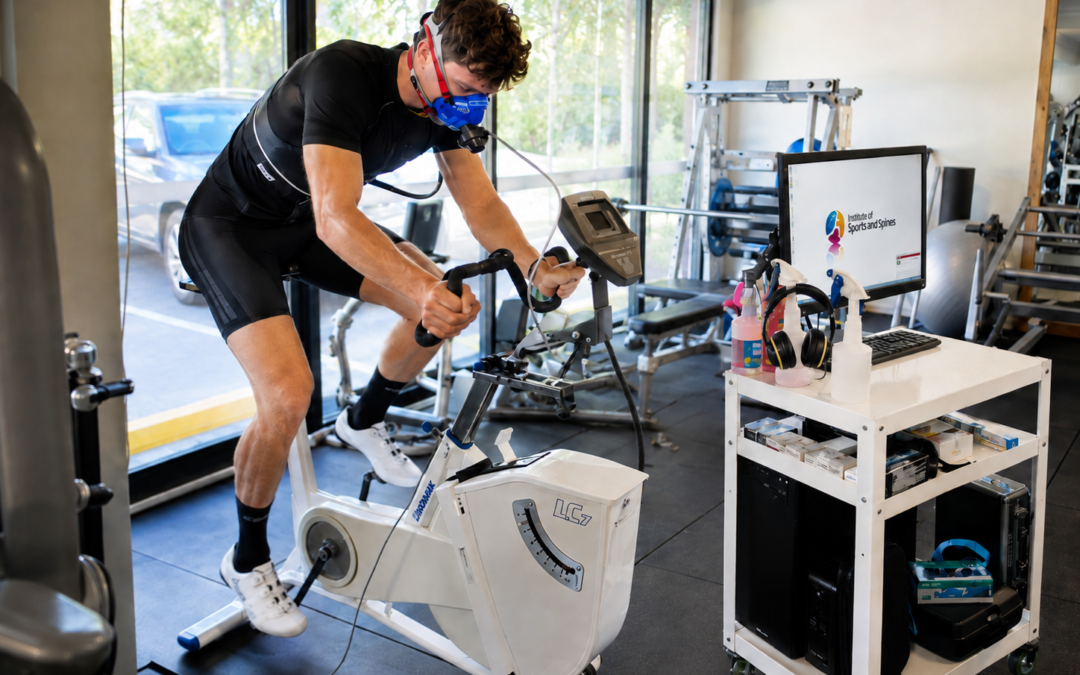
At the Institute of Sports and Spines in Tingalpa, we offer structured submaximal aerobic fitness testing for athletes and active individuals. Our assessment uses a Monark LC7 cycle ergometer or treadmill, depending on your sport, training experience and individual requirements. The aim is to estimate aerobic capacity and gather objective information to support training decisions.
What Happens During Your VO2 Max Assessment?
Step 1: Review Your Training Goals
We consider your sporting background, current activity levels, training goals and relevant health or injury history. This helps determine an appropriate testing protocol.
Step 2: Select the Testing Equipment
Depending on your requirements, testing may be performed using:
- Monark LC7 cycle ergometer: Particularly relevant for cyclists and athletes accustomed to cycling.
- Treadmill: Often suitable for runners, field-sport athletes and individuals whose training involves walking or running.
Step 3: Complete a Structured Submaximal Test
You complete several controlled stages of exercise. Workload gradually increases while heart rate is monitored. Depending on the exercise mode, we record measurements such as cycling power, cadence, treadmill speed and exercise duration.
Step 4: Analyse Your Results
The recorded heart-rate and workload data are analysed using computer-based calculations and established estimation methods. These calculations help develop an aerobic fitness profile and estimate VO2 max. Where relevant, we may also use Kinovea video-analysis software to review movement, technique and timing.
Kinovea can assist with selected two-dimensional movement measurements when appropriate recording procedures are followed (Puig-Diví et al., 2019). It does not directly measure oxygen consumption.
Step 5: Use the Results to Guide Training
Your assessment findings can help identify areas for improvement and guide future exercise programming. Repeating the assessment using a consistent protocol can also help monitor changes in fitness over time.
Why Choose Structured Aerobic Fitness Testing?
Fitness watches can provide useful estimates of VO2 max. However, these calculations rely on algorithms and may be influenced by the quality of available sensor data. Our structured testing approach provides additional context by recording heart rate during controlled and documented exercise workloads.
Benefits include:
- Testing conditions that can be reproduced
- Measured exercise workload and heart-rate response
- Assessment using sport-relevant equipment
- Objective comparison between testing sessions
- Information to guide individualised exercise planning
Structured submaximal testing does not replace direct respiratory gas analysis. However, it provides a practical method of estimating aerobic fitness and monitoring responses to exercise.
Frequently Asked Questions About VO2 Max Testing
What is a good VO2 max for my age?
A good VO2 max depends on your age, sex, training background and sport. Endurance athletes often have higher VO2 max values than sedentary individuals. However, the most useful comparison is not always against population averages. Your individual fitness goals and changes over time are also important.
Can VO2 max improve with training?
Yes. Regular aerobic exercise and appropriately prescribed high-intensity interval training can improve VO2 max. The amount of improvement varies between individuals and depends on factors such as genetics, current fitness, training intensity and consistency.
Is VO2 max testing only for elite athletes?
No. Recreational athletes and physically active individuals may benefit from aerobic fitness testing. It can help establish a baseline, guide training and monitor progress.
Is submaximal VO2 max testing accurate?
Submaximal testing can provide a useful estimate of aerobic capacity when an appropriate protocol is followed. However, estimates are subject to error and should not be interpreted as equivalent to directly measured VO2 max. Consistent equipment, testing conditions and procedures help improve the usefulness of repeated assessments.
How often should I repeat VO2 max testing?
Testing frequency depends on your training goals and program. For some athletes, reassessment after approximately 8–12 weeks of structured training may provide useful information about progress. Testing may also be considered at the beginning of a training program, during preparation for competition or following an extended break from exercise.
Can VO2 max testing help with running and cycling performance?
Yes. Aerobic testing can help runners and cyclists understand their current aerobic fitness and monitor changes in exercise capacity. However, performance also depends on factors such as movement efficiency, sustainable exercise intensity, strength and sport-specific training.
Book VO2 Max Testing in Brisbane
Want to understand your aerobic fitness and train with greater purpose?
At the Institute of Sports and Spines, our exercise science services include submaximal aerobic fitness testing to help athletes assess their fitness and monitor performance. Whether you are preparing for competition, improving your running or cycling fitness, or returning to structured exercise, objective testing can provide a useful starting point.
Contact the Institute of Sports and Spines in Tingalpa, Brisbane, to enquire about aerobic fitness testing and sports performance assessment, OR click here to make an appointment.
Phone: (07) 3398 7022
Location: 1566 Wynnum Road, Tingalpa, Brisbane
References
Bassett, D. R., & Howley, E. T. (2000). Limiting factors for maximum oxygen uptake and determinants of endurance performance. Medicine & Science in Sports & Exercise, 32(1), 70–84.
Joyner, M. J., & Coyle, E. F. (2008). Endurance exercise performance: The physiology of champions. The Journal of Physiology, 586(1), 35–44.
Olsson, K. S. E., Rosdahl, H., & Schantz, P. (2022). Interchangeability and optimization of heart rate methods for estimating oxygen uptake in ergometer cycling, level treadmill walking and running. BMC Medical Research Methodology, 22, 55.
Puig-Diví, A., Escalona-Marfil, C., Padullés-Riu, J. M., et al. (2019). Validity and reliability of the Kinovea program in obtaining angles and distances using coordinates in four perspectives. PLOS ONE, 14(6), e0216448.
Ross, R., Blair, S. N., Arena, R., et al. (2016). Importance of assessing cardiorespiratory fitness in clinical practice: A case for fitness as a clinical vital sign. Circulation, 134(24), e653–e699.
Weeldreyer, N. R., De Guzman, J. C., Paterson, C., et al. (2025). Cardiorespiratory fitness, body mass index and mortality: A systematic review and meta-analysis. British Journal of Sports Medicine, 59(5), 339–346.
Wen, D., Utesch, T., Wu, J., et al. (2019). Effects of different protocols of high-intensity interval training for VO2 max improvements in adults: A meta-analysis of randomised controlled trials. Journal of Science and Medicine in Sport, 22(8), 941–947.
Recent Comments