

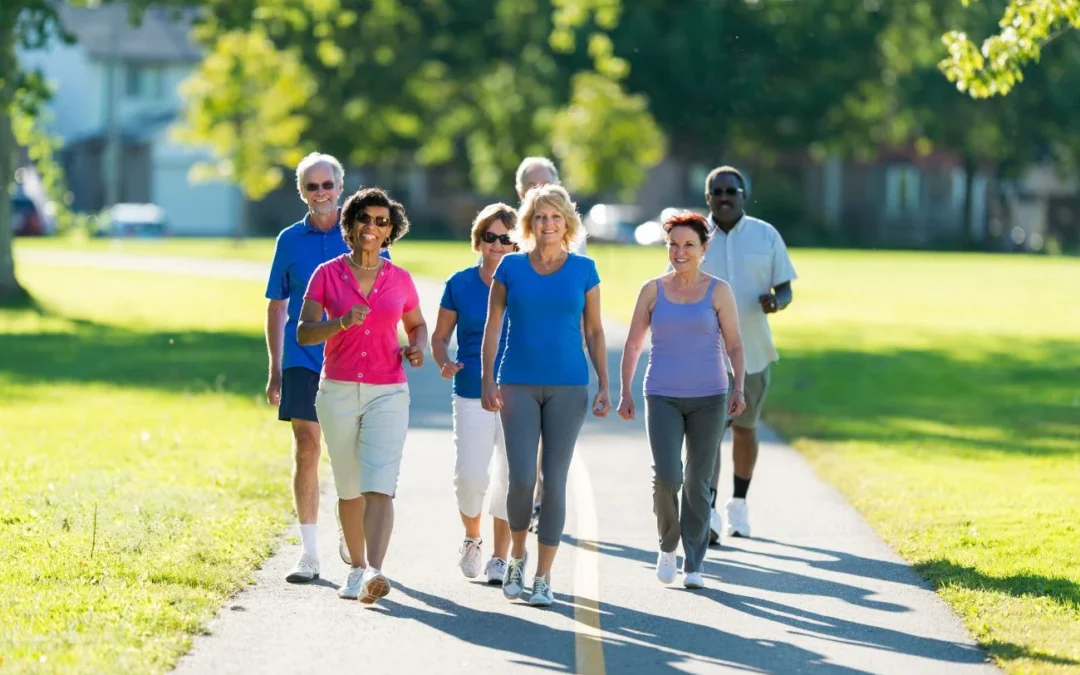
Walking: Surprising Benefits of an Underrated Exercise
When it comes to improving our health and fitness, we often think of gym memberships, running, weight training and high-intensity workouts. However, one of the simplest and most effective forms of exercise is something most of us already do: walking.
The benefits of walking are often underestimated. Regular walking can improve cardiovascular health, support healthy blood pressure, help regulate blood sugar and improve mental wellbeing.
Walking also helps maintain joint mobility, muscle function and physical independence as we age.
Unlike many other forms of exercise, walking is low-impact, requires very little equipment and fits easily into everyday life.
The best part? You don’t need to walk for an hour to experience health benefits.
In fact, research suggests that shorter walks and interval walking can provide meaningful improvements in health and fitness.
What Are the Health Benefits of Walking?
Walking is one of the most accessible ways to improve your health. Whether you walk around your neighbourhood, through a park or during your lunch break, regular movement offers several important benefits.
These include:
- Heart health: Regular brisk walking improves cardiovascular fitness and can help manage blood pressure.
- Blood sugar regulation: Walking, particularly after meals, can help reduce increases in blood glucose.
- Muscle strength and mobility: Walking helps maintain lower-limb function and supports everyday movement.
- Mental wellbeing: Physical activity can improve mood and reduce symptoms of stress and anxiety.
- Weight management: Regular walking increases daily energy expenditure and can support healthy weight management.
- Healthy ageing: Maintaining physical activity helps preserve mobility, fitness and independence as we get older.
Although walking is beneficial, it does not replace every form of exercise. Strength training and balance exercises also play important roles in maintaining physical health.
However, walking provides an excellent foundation for a more active lifestyle.
Exercise Snacking: Why Short Walks Can Make a Difference
You don’t need to complete one long workout to benefit from physical activity.
Research increasingly supports the value of accumulating shorter periods of movement throughout the day. This approach is sometimes called exercise snacking.
Rather than relying entirely on one exercise session, exercise snacking involves adding short bursts of activity to your daily routine.
For example, you could:
- Walk for five minutes during your lunch break.
- Take a short walk after breakfast or dinner.
- Walk around the office between tasks.
- Use the stairs instead of the lift.
- Break up long periods of sitting with movement.
These small activities can help increase your total daily movement without requiring a major change to your routine.
Can Walking After Meals Improve Blood Sugar?
Yes. Research suggests that walking after meals can help improve blood sugar regulation.
When we eat, particularly carbohydrate-rich foods, our blood glucose levels rise. Physical activity encourages muscles to take up glucose from the bloodstream, helping reduce post-meal glucose levels.
A systematic review and meta-analysis published in 2022 found that accumulating shorter bouts of exercise could improve post-meal glucose regulation compared with a single continuous session of equivalent exercise.
Another systematic review found that exercise performed shortly after eating was particularly effective at reducing post-meal blood glucose increases.
Therefore, taking several short walks throughout the day may offer benefits beyond simply achieving a daily step target.
Even a short walk after dinner is a worthwhile place to start.
Japanese Interval Walking: A Simple Way to Improve Fitness
Want to get even more out of your daily walk?
You could try Japanese Interval Walking Training (IWT), a method developed and studied by researchers in Japan.
Unlike conventional steady-paced walking, Japanese interval walking alternates between periods of faster and slower movement.
The aim is to challenge your cardiovascular system during the faster intervals while allowing some recovery during the slower periods.
How Does Japanese Interval Walking Work?
The commonly recommended approach involves:
- Walk briskly for three minutes. Increase your pace until your breathing and heart rate noticeably rise.
- Walk slowly for three minutes. Reduce your pace to allow your breathing to recover.
- Repeat the cycle five times. This creates a 30-minute walking session.
During the faster intervals, the effort should feel challenging relative to your fitness level. However, you should remain in control of your pace and movement.
The slower intervals allow you to recover before increasing your speed again.
Importantly, beginners can start with fewer intervals and gradually increase the duration as their fitness improves.
What Does Research Say About Japanese Interval Walking?
Research suggests that interval walking can produce greater improvements in some measures of strength and cardiovascular fitness than conventional steady-paced walking.
A landmark study by Nemoto and colleagues, published in Mayo Clinic Proceedings in 2007, investigated interval walking in 246 middle-aged and older adults over five months.
Researchers compared high-intensity interval walking with continuous moderate-intensity walking and a non-training comparison group.
Participants undertaking interval walking demonstrated significant improvements in several important measures.
Improvements in Muscle Strength
- Knee extension strength: Increased by approximately 13%.
- Knee flexion strength: Increased by approximately 17%.
These improvements are particularly relevant for older adults because lower-limb strength contributes to mobility and independence.
Improvements in Cardiovascular Fitness
- Peak aerobic capacity during cycling: Increased by approximately 8%.
- Peak aerobic capacity during walking: Increased by approximately 9%.
The interval walking group achieved greater improvements in these measures than the moderate-intensity continuous walking group.
Improvements in Blood Pressure
The researchers also reported a greater reduction in resting systolic blood pressure among participants completing interval walking.
These findings suggest that incorporating faster walking intervals may improve physical fitness beyond the benefits achieved through steady-paced walking alone.
However, individual results will vary depending on fitness, health status and training consistency.
Other research has explored potential changes in thigh muscle size and body composition. Nevertheless, the evidence for substantial muscle growth remains less established than the evidence for improvements in strength and cardiovascular fitness.
Why Is Walking Especially Important as We Age?
Maintaining muscle strength, balance and cardiovascular fitness becomes increasingly important as we get older.
Age-related changes in physical capacity can make everyday activities more challenging. Tasks such as climbing stairs, walking uphill or getting out of a chair may require greater effort.
Regular walking helps maintain cardiovascular fitness and supports lower-limb function.
Furthermore, introducing appropriately challenging walking intervals may provide an additional training stimulus.
For older adults, these benefits can contribute to maintaining mobility, confidence and independence.
However, walking should ideally form part of a broader exercise program that also includes resistance training and balance activities.
How Much Walking Should You Do?
Australian and international physical activity guidelines recommend that adults aim for 150–300 minutes of moderate-intensity physical activity each week, or an equivalent amount of vigorous activity.
Brisk walking can contribute towards this target.
However, you don’t need to reach these recommendations immediately to start benefiting from exercise.
If you are currently inactive, begin with manageable walks and gradually increase your activity.
For example:
- Beginners: Start with 5–10 minutes of comfortable walking.
- Building fitness: Increase the duration or frequency of your walks.
- Improving cardiovascular fitness: Introduce short periods of brisk walking.
- Ready for a challenge: Try Japanese interval walking.
The most effective routine is one that suits your current fitness, health needs and lifestyle.
Consistency matters more than trying to do too much too soon.
Getting Started: Make Walking Part of Your Daily Routine
Improving your health doesn’t always require an expensive gym membership or a complicated exercise program.
Start by looking for simple opportunities to move more throughout your day.
A short walk during your lunch break, a stroll after dinner or a few minutes of movement between tasks can all contribute to better health.
As your fitness improves, gradually increase your walking pace or introduce faster intervals.
For those with existing health conditions, mobility difficulties or concerns about exercise intensity, an individualised assessment with a qualified health professional may help determine an appropriate starting point.
At the Institute of Sports and Spines in Tingalpa, Brisbane, our physiotherapy and exercise physiology teams help people improve mobility, strength and physical fitness through tailored exercise programs.
Whether your goal is to become more active, improve cardiovascular fitness or maintain independence as you age, walking is an excellent place to begin.
Sometimes, the best thing you can do for your health is simply put on your walking shoes and head outside.
Click here to Book a consultation or get in touch today.
Or call us on (07) 3398 7022.
References
- Nemoto, K., Gen-no, H., Masuki, S., Okazaki, K., & Nose, H. (2007). Effects of high-intensity interval walking training on physical fitness and blood pressure in middle-aged and older people. Mayo Clinic Proceedings, 82(7), 803–811. https://doi.org/10.4065/82.7.803
- The Effects of Accumulated Versus Continuous Exercise on Postprandial Glycemia, Insulin, and Triglycerides in Adults with or Without Diabetes: A Systematic Review and Meta-Analysis. (2022). https://pubmed.ncbi.nlm.nih.gov/35072806/
- After Dinner Rest a While, After Supper Walk a Mile? A Systematic Review with Meta-analysis on the Acute Postprandial Glycemic Response to Exercise Before and After Meal Ingestion in Healthy Subjects and Patients with Impaired Glucose Tolerance. (2023). https://pmc.ncbi.nlm.nih.gov/articles/PMC10036272/
- World Health Organization. (2020). WHO guidelines on physical activity and sedentary behaviour. https://www.ncbi.nlm.nih.gov/books/NBK566046/
Recent Comments