

Dynamic Stretching vs Static Stretching: Which Is Best Before Exercise?
Mobility and flexibility work are often recommended to help people move well and prepare for physical activity. However, not every technique has the same effect on the body. The type of movement you use before exercise can influence how your body performs. In some cases, holding muscles in a lengthened position immediately before activity may temporarily reduce strength, power, or explosiveness. That is why understanding the difference between dynamic stretching vs static stretching matters.
Dynamic movements are generally best before exercise because they prepare your muscles, joints, and nervous system for activity. Static holds are often better after exercise or as part of a separate flexibility session.
What Is Dynamic Stretching?
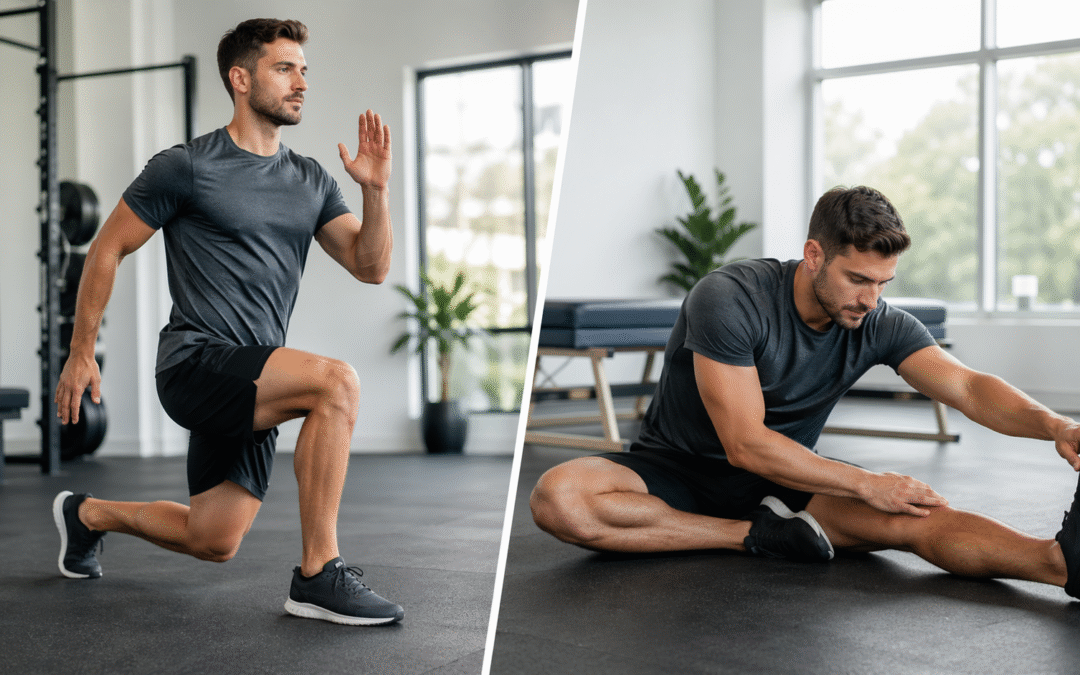
Dynamic stretching involves controlled movement through a comfortable range of motion. Instead of holding one position, you repeatedly move the body in a way that gradually prepares it for the activity ahead.
Common examples include:
- Leg swings
- Arm circles
- Walking lunges
- Hip circles
- High knees
- Bodyweight squats
- Torso rotations
These movements are commonly used as part of a warm-up because they help increase mobility, raise body temperature, and prepare the body for exercise. A 2024 systematic review found that dynamic warm-up techniques had more favourable effects on lower-limb performance and range of motion compared with static techniques.
Why Dynamic Movement Is Best Before Exercise
Before exercise, the goal is to prepare your body to move efficiently. A dynamic warm-up can gradually increase movement while activating the muscles you are about to use.
A good warm-up may help:
- Improve blood flow
- Increase range of motion
- Activate muscles
- Prepare the nervous system
- Improve coordination
- Support strength and power output
This is particularly important before running, gym training, sport, or activities that involve speed, jumping, lifting, or quick changes of direction.
For best results, your warm-up exercises should reflect the activity you are about to perform. For example, walking lunges and leg swings can be useful before running, while arm circles and shoulder rotations may help prepare for upper-body training.
What Is Static Stretching?
Static stretching involves moving into a comfortable position and holding it for a period of time, commonly between 15 and 60 seconds.
Examples include:
- Holding a hamstring position
- Holding a calf stretch
- Holding a quadriceps stretch
- Holding a chest-opening position
- Holding a hip flexor stretch
Static holds can be useful for improving flexibility and range of motion over time. They are generally better suited to after exercise, during a cool-down, or as part of a dedicated mobility and flexibility routine.
Regular flexibility work can improve range of motion, particularly when performed consistently. General guidance often recommends performing this type of exercise at least 2–3 days per week, with positions held for approximately 10–30 seconds and repeated as appropriate.
Why Static Stretching Before Exercise May Reduce Performance
Static stretching is not necessarily harmful, but timing matters. Holding a muscle in a lengthened position for an extended period immediately before high-intensity activity may temporarily reduce strength, power, and explosive performance.
This is particularly relevant before:
- Sprinting
- Jumping
- Heavy lifting
- Competitive sport
- Explosive movements
Research suggests that the effect depends on factors such as duration, intensity, and what activity is performed afterwards.
Short static holds may have less impact. However, static flexibility work alone is generally not the best warm-up before performance-based exercise.
A better approach is to use dynamic movement before exercise and leave longer static holds for after training or another time of day when improving flexibility is the main goal.
Dynamic vs Static Stretching: When Should You Use Each?
An easy way to remember the difference is: Dynamic movements before exercise. Static holds after exercise. Before activity, use a dynamic warm-up to prepare your body for movement. Afterwards, static flexibility exercises can be used to work on range of motion and areas that feel restricted or tight.
Simple Dynamic Warm-Up Example
Before a workout, aim for approximately 5–10 minutes of movement that gradually increases in intensity.
A simple warm-up could include:
- 1–2 minutes of light walking, jogging, or cycling
- 10 leg swings on each side
- 10 walking lunges
- 10 bodyweight squats
- 10 arm circles in each direction
- 10 hip circles in each direction
- 2–3 short practice movements related to your sport or workout
Your warm-up should leave you feeling warmer, more mobile, and ready to move — not tired or overly fatigued.
Simple Flexibility Routine After Exercise
After exercise, or as a separate session, static holds can be used to gradually improve flexibility.
A simple routine may include:
- Hamstrings
- Hip flexors
- Calves
- Quadriceps
- Glutes
- Chest
- Upper back
Move gently into each position. You should feel mild tension rather than pain.
For many people, 5–10 minutes of consistent flexibility work several times per week may be more useful than performing one long session occasionally.
Practical Takeaway
For most people, the approach is relatively simple. Use dynamic stretching before exercise to prepare your muscles and joints, increase movement, and support physical performance. Use static stretching after exercise or as part of a dedicated flexibility session to gradually improve range of motion. If strength, speed, or power are important to your activity, avoid prolonged static holds immediately beforehand.
When to Get Professional Advice
If you continually feel tight, repeatedly work on the same area without improvement, or experience recurring pain or injuries, flexibility may only be part of the issue.
Persistent tightness can sometimes be associated with:
- Strength deficits
- Reduced movement control
- Joint restriction
- Changes in training load
- Previous injury
- Exercise technique
A chiropractor can assess how your body is moving, identify factors that may be contributing to the problem, and develop a targeted management plan.
Final Thoughts: Choose the Right Approach at the Right Time
Mobility and flexibility exercises can be valuable, but they are most effective when used appropriately. Dynamic stretching is generally better before exercise because it prepares the body for movement and physical activity. Static stretching is generally better after exercise or as part of a separate flexibility routine. Choosing the appropriate technique at the right time can help you move more effectively, prepare for activity, and get more from your training.
If you need help choosing the right exercises for your body or activity, book an appointment today with Charles Chittinappilly.
Recent Comments