

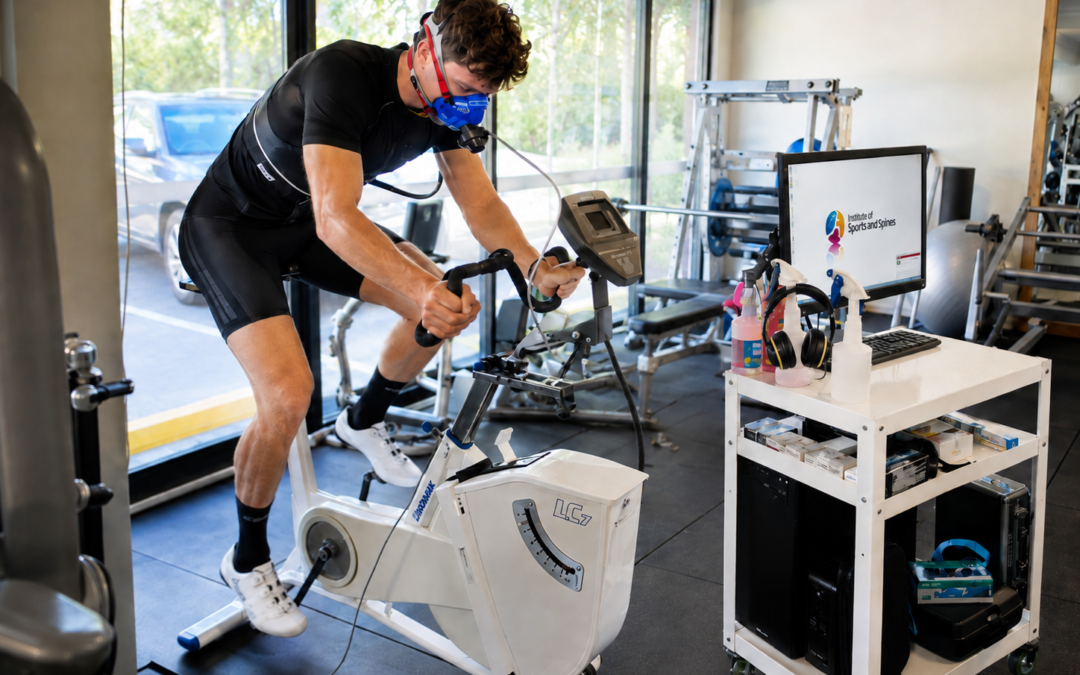
Sports Performance Testing Brisbane: Measure Your Performance and Train with Purpose
Improving sports performance takes more than simply training harder. To improve effectively, athletes need to understand their current strengths, identify areas for development and follow a training program that reflects the demands of their sport.
Sports performance testing in Brisbane provides objective information about physical qualities such as speed, strength, power, agility and aerobic fitness.
At the Institute of Sports and Spines (IOSAS) in Tingalpa, our exercise science services use performance testing to help athletes better understand their physical capabilities, track progress and develop more individualised training programs.
Whether you are a junior athlete, recreational competitor or experienced athlete, performance testing can provide useful information to help guide your training.
What Is Sports Performance Testing?
Sports performance testing involves a series of physical assessments selected according to your sport, playing position, training experience and performance goals.
The aim is to establish your current performance level and identify physical qualities that may benefit from targeted training.
Depending on your needs, athlete performance testing may assess:
-
Speed and acceleration
-
Strength
-
Lower-body power
-
Agility and change-of-direction ability
-
Aerobic fitness
-
High-intensity exercise capacity
-
Muscular endurance
-
Balance and stability
-
Movement quality
However, not every athlete needs the same tests.
For example, a footballer, runner and court-sport athlete experience very different physical demands. Therefore, testing should be selected according to the individual athlete rather than using the same assessment for everyone.
Who Can Benefit From Sports Performance Testing?
Sports performance testing is not limited to professional or elite athletes.
It may be useful for:
-
Junior athletes
-
Recreational athletes
-
Community and amateur players
-
Competitive athletes
-
Athletes preparing for pre-season
-
Footballers wanting to improve their physical performance
-
Runners wanting to assess fitness and physical capacity
-
Athletes returning to training following appropriate medical or rehabilitation clearance
-
People wanting to improve speed, strength, power or conditioning
-
Coaches seeking objective information about an athlete’s physical performance
Performance testing can be particularly useful if you want a clearer understanding of your physical capabilities and a more structured approach to sports performance training.
What Happens During a Sports Performance Assessment?
Your sports performance assessment starts by understanding you as an athlete.
Before testing begins, your exercise scientist may discuss:
-
Your sport
-
Your playing position or event
-
Your current training schedule
-
Your competition level
-
Your previous training experience
-
Your short-term and long-term goals
-
Upcoming competitions or season dates
-
Your perceived strengths and weaknesses
-
Your available training time
-
Your access to training equipment
-
Relevant injury history
-
Any medical or rehabilitation clearance requirements
This information helps determine which tests are suitable and relevant.
Every assessment should have a clear purpose. A performance test is most useful when the result can help guide a training decision.
How Are Sports Performance Tests Selected?
Effective fitness testing for athletes should reflect the physical demands of the sport.
Rather than completing a large number of tests, the aim is to choose assessments that provide useful information about the athlete’s performance.
Football Performance Testing
For example, a football performance assessment may examine:
-
Sprint acceleration
-
Change-of-direction ability
-
Lower-body power
-
Strength
-
Muscular endurance
-
Aerobic fitness
-
Repeated high-intensity exercise capacity
These qualities may influence an athlete’s ability to accelerate, change direction, repeat high-intensity efforts and maintain performance throughout a match.
Running Performance Testing
A runner may require a different approach.
Testing may place greater emphasis on:
-
Aerobic fitness
-
Running-related strength
-
Muscular endurance
-
Lower-limb control
-
Fatigue resistance
-
Movement capacity
The most appropriate testing approach depends on the athlete, their event and their goals.
How Are Sports Performance Testing Results Used?
Your results can be used to create an individual performance profile.
This profile highlights your current physical strengths while identifying areas that may benefit from further development.
These may include:
-
Maximum strength
-
Explosive power
-
Sprint acceleration
-
Agility
-
Aerobic conditioning
-
Repeated-sprint ability
-
Muscular endurance
-
Balance
-
Single-leg control
Two athletes playing the same sport can have very different physical profiles.
For example, one footballer may demonstrate good aerobic fitness but need greater acceleration and lower-body strength.
Another player may already be fast and powerful but may benefit from improving aerobic capacity and repeated-effort performance.
This is why objective testing can be useful. It allows training to be based on the individual athlete rather than using a generic program.
Individualised Sports Performance Training
Following your assessment, an exercise scientist in Brisbane can use your testing results, sporting demands and training schedule to help develop an individualised performance program.
Depending on your goals, your program may include:
-
Strength training
-
Speed and acceleration training
-
Power development
-
Plyometric exercises
-
Agility training
-
Change-of-direction drills
-
Aerobic conditioning
-
High-intensity interval training
-
Muscular endurance training
-
Core and trunk exercises
-
Mobility exercises
-
Movement preparation
-
Recovery and workload considerations
Importantly, your performance program should complement your existing sport training rather than simply adding more exercise.
Your matches, team training, recovery needs, work or school commitments and available training time can all be considered when planning your program.
This allows training to focus on the physical qualities that are most relevant to your goals.
Why Is Retesting Important?
An initial sports performance assessment provides a snapshot of your current capabilities.
However, testing becomes even more useful when it is repeated after a structured period of training.
Retesting can help determine whether:
-
Sprint performance has improved
-
Strength has increased
-
Power output has changed
-
Aerobic fitness has improved
-
Change-of-direction performance has progressed
-
Muscular endurance has improved
-
Your current training program is producing the intended adaptations
-
Your next training block should have a different focus
Without objective measurements, it can be difficult to know whether performance has genuinely improved or whether training simply feels easier.
Retesting provides a clearer way to measure progress over time.
Why Use Objective Sports Performance Testing?
Athletes often have a good understanding of their sport, but perception does not always provide the complete picture.
Objective performance data can help answer questions such as:
-
Am I getting faster?
-
Is my strength improving?
-
Has my conditioning changed?
-
Which physical quality should I prioritise?
-
Is my current program working?
-
What should I focus on during my next training block?
This information can help make training more purposeful.
It can also provide useful benchmarks that can be compared during future testing sessions.
Working With Coaches and Health Professionals
Sports performance development often involves more than one person.
Where appropriate, communication between the athlete, coach and healthcare professionals can help ensure that training goals are aligned.
With your consent, testing results or relevant training information may be shared with your:
-
Sports coach
-
Strength and conditioning coach
-
Physiotherapist
-
Exercise physiologist
-
Sports doctor
-
Other relevant members of your performance team
This collaborative approach may help with training planning, workload management and communication between those involved in your performance or rehabilitation.
An exercise scientist does not diagnose or treat injuries.
If you are experiencing pain, injury or symptoms requiring clinical assessment, you may need to be assessed by an appropriate healthcare professional such as a physiotherapist, chiropractor, GP, sports physician or accredited exercise physiologist before completing certain tests or exercises.
Sports Performance Testing for Junior Athletes
Junior athletes can also benefit from appropriately selected performance testing.
Testing can provide useful baseline information about qualities such as:
-
Speed
-
Strength
-
Power
-
Agility
-
Endurance
-
Movement skills
For younger athletes, testing and training should always be appropriate for their age, physical development, sport and experience.
The aim should be to support long-term athletic development rather than simply comparing a junior athlete with adult performance standards.
Sports Performance Testing in Brisbane at IOSAS
IOSAS provides sports performance testing in Brisbane from our Tingalpa clinic.
Our exercise science services can help athletes assess their current physical performance, identify training priorities and develop individualised programs based on their sport and goals.
Performance testing may be suitable for athletes involved in a wide range of sports, including field sports, running, court sports and individual competition.
Frequently Asked Questions About Sports Performance Testing
What does sports performance testing measure?
Sports performance testing may assess speed, acceleration, strength, power, agility, aerobic fitness, muscular endurance, balance and other physical qualities. The tests selected depend on your sport and goals.
Is sports performance testing only for elite athletes?
No. Testing can be useful for junior, recreational, amateur and competitive athletes who want objective information about their physical performance.
How long does sports performance testing take?
The length of the assessment depends on the number and type of tests being completed. Your testing session should be designed around the information needed to guide your training.
Can performance testing help improve my sport?
Performance testing does not guarantee improved sporting performance. However, it can identify physical strengths and areas for development, helping to guide a more targeted training program.
How often should athletes be retested?
Retesting frequency depends on your goals and training program. In many cases, testing may be repeated after a structured training block to assess changes and help plan the next phase of training.
Can I receive a training program after testing?
Yes. Testing results can be used to help develop an individualised sports performance program based on your current abilities, sport, goals and available training time.
Book Sports Performance Testing in Brisbane
If you want a clearer understanding of your speed, strength, power, fitness or overall physical performance, a sports performance assessment can provide objective information to help guide your training.
Contact Institute of Sports and Spines (IOSAS) in Tingalpa, Brisbane on (07) 3398 7022 to learn more about sports performance testing, exercise science and individualised athlete training programs.
Book a sports performance assessment with our exercise science team and start training with a clearer understanding of your current performance.
Performance testing and exercise programs are tailored to the individual. Results and responses to training vary between athletes. Appropriate medical or allied health assessment may be recommended where injury, pain or other clinical concerns are present.
Recent Comments