

A trigger point is a small, hyper-irritable spot found within a tight band of muscle tissue. These sensitive areas often develop when a muscle becomes overloaded, stressed, or injured.
When a muscle is under ongoing tension, blood flow to the area can become restricted. This may lead to a build-up of metabolic waste and reduced oxygen supply, making the muscle fibers more sensitive and reactive.
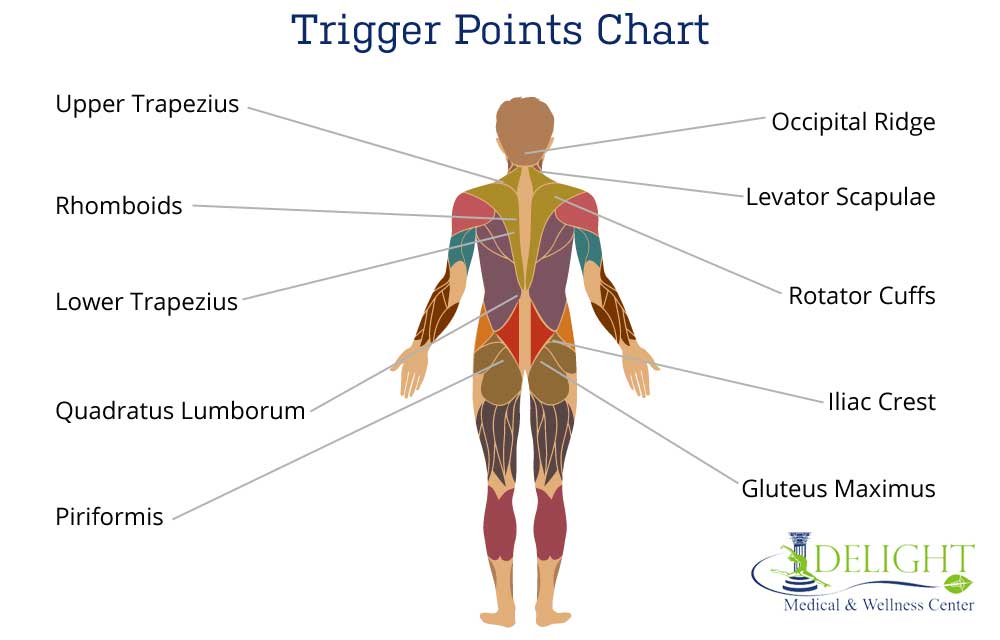
When pressed, a trigger point commonly feels like a tender knot or lump in the muscle. It may cause:
-
Local pain or soreness
-
Muscle stiffness or reduced flexibility
-
Discomfort that worsens with movement or pressure
What makes trigger points especially notable is their ability to cause referred pain — pain felt in a different area of the body from where the trigger point is located. For example, a trigger point in the shoulder may contribute to neck pain or headaches.
How Trigger Points Are Treated in Remedial Massage Therapy
In remedial massage therapy, identifying and treating trigger points plays an important role in reducing muscle tension and restoring normal movement.
Common techniques used include:
-
Sustained pressure applied directly to the trigger point
-
Myofascial release to improve tissue mobility
-
Gentle stretching to lengthen tight muscle fibres
These techniques aim to:
-
Improve local blood flow
-
Reduce muscle guarding
-
Help deactivate trigger points
-
Support the body’s natural healing processes
Benefits of Trigger Point Release
Releasing trigger points through remedial massage may help:
-
Reduce muscle pain and discomfort
-
Improve range of motion and flexibility
-
Ease tension associated with postural strain
-
Support recovery from both acute and chronic musculoskeletal issues
Trigger point therapy is commonly used as part of a broader treatment approach, especially when muscle tension is contributing to ongoing pain or movement restriction.
Recent Comments