

Puncturing the Myths
By Chee Yeap,
Acupuncture has been used to treat different conditions for at least 3000 years in China and has gained increasing acceptance worldwide. Because it has a history that reaches back to prehistory, some people are sceptical about its scientific merit. However, in just the last 20 years, thousands of studies have been conducted regarding the efficacy of it in treating various conditions.
Myths?:
Not every research study is valid, of course, and of the thousands that have been conducted, not all found evidence that it works. But there’s enough evidence that scientists continue to investigate and question when and under what circumstances acupuncture is beneficial.
The needle inserted into the muscle layer at the acupoint produces the so-called obtaining Qi sensation that causes the excitation of A-δ and C-fibres of the muscle tissue, resulting in afferent signals.
The afferent signals pass through the dorsal horn cells of the spinal cord ascending to the brain, such as the hypothalamus, enhancing the release of neuropeptides and hormones, and these afferent signals in the spinal segment may innervate the visceral organ, inducing effect on visceral function.
As you may know, IOSAS offers acupuncture as a complement to other natural healing techniques such as chiropractic and remedial massage. What you might not realise, however, is how many TCM modalities can be put to work toward your health and wellness goals.
Take a look at some of the most common modalities, their benefits and scientific evidence behind them.- Puncture the myths

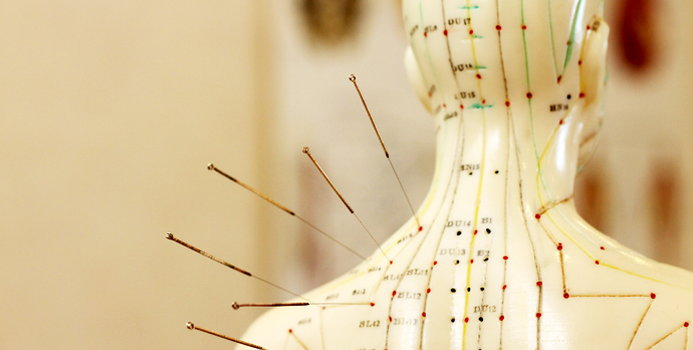
This modality involves the placement of hair-fine needles at strategic points on the body. Traditional Chinese Medicine holds that these points alter the flow of life energy along imaginary pathways called meridians.
Recent studies showed the effect of the stimulation on neuropeptides and hormones, including β-endorphin, serotonin, oxytocin, adrenocorticotropic hormone, gonadotropin-releasing hormone, corticotrophin-releasing hormone, cholecystokinin, and acetylcholine, as well as insulin sensitivity, immunomodulation (anti-inflammation), and autonomic nerve activity.
These biochemical changes stimulate the body’s natural healing abilities and promote physical and emotional well-being.
Electroacupuncture (EA)

Electroacupuncture works on the same basic principles as standard acupuncture, it involves stimulating two needles with an electrical current. It further enhances the healing properties of traditional acupuncture.
Emerging studies have shown that electroacupuncture can inhibit the induction and transmission of pain signals and, consequently, mediate anti-nociceptive and anti-inflammatory effects by rebalancing the neural-immune-endocrine interactions.
Hence, electroacupuncture is now quite commonly used in treating musculoskeletal issue. Besides, electroacupuncture is also an effective and safe intervention for patients with spasticity after stroke. Despite it being controversial in many ways, it is still a promising treatment method for rehabilitation of post-stroke patients in many countries.
Book an appointment today!
Recent Comments