

Exercise Scientists
Your Health. Your Goals. Our Team. How Can We Help?Jack McDonagh
Exercise and Sports Scientist
Bachelor of Exercise and Sports Science
Memb: ESSA. AES, SMA
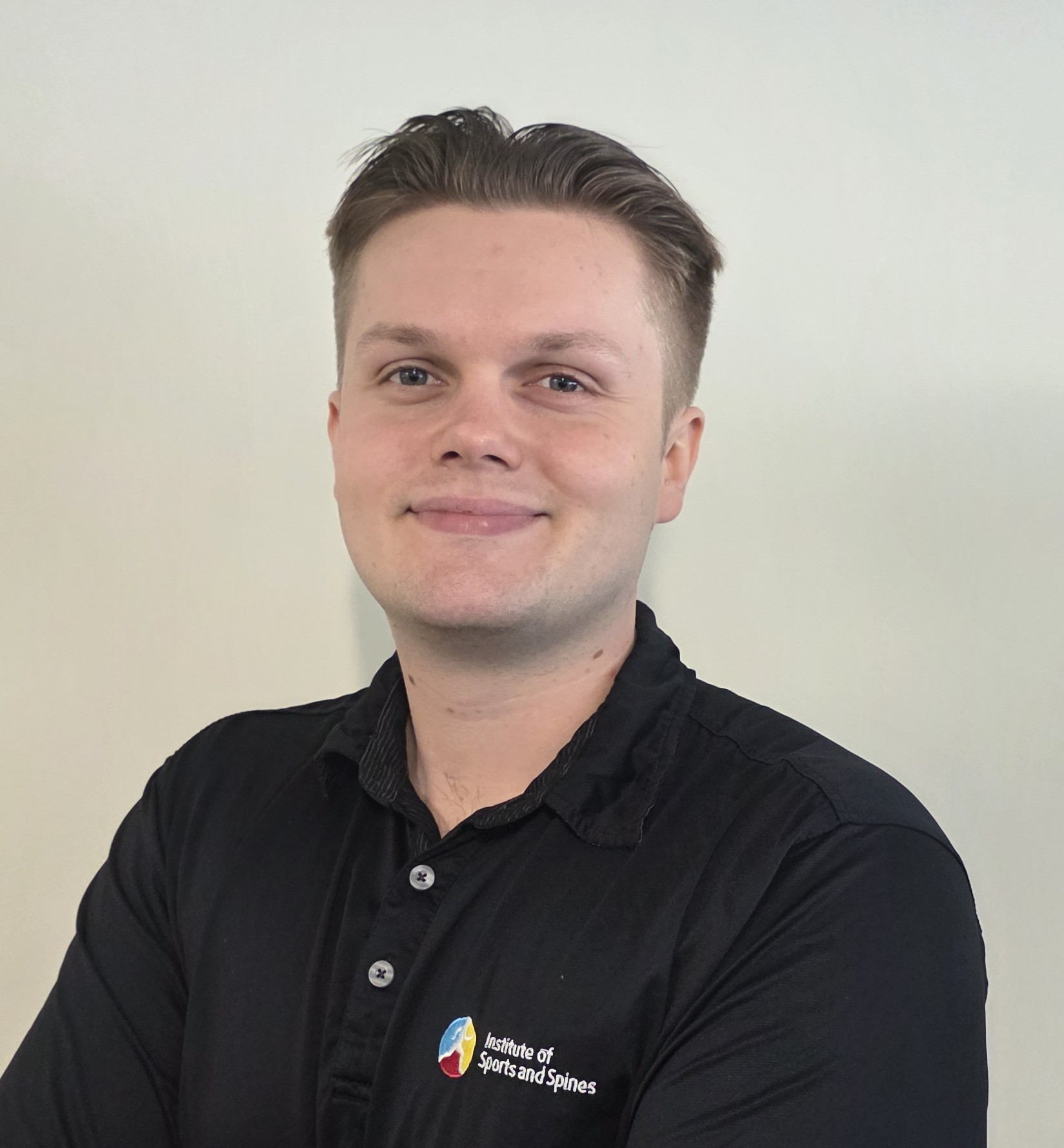
Jack McDonagh is an Exercise and Sports Scientist at the Institute of Sports and Spines, in Tingalpa Brisbane with a strong passion for exercise, fitness and helping people improve their health and performance through practical exercise prescription.
Jack has a Bachelor of Exercise and Sports Science from Australian Catholic University. With his strong football background in combination with his studies, he has a strong interest in strength and conditioning, sports performance, exercise testing and working with clients across a range of fitness levels. He brings a fresh and relatable approach to exercise science, while still focusing on evidence-based and goal-focused training.
Through his own background playing semi-professional football, Jack understands the demands of sport and the importance of strength, conditioning, movement quality and confidence in performance. This experience has helped shape his interest in working with athletes and active individuals who want to improve their fitness, return to sport, or take their performance to a higher level.
Jack McDonagh also enjoys working with beginner gym clients and people who may be new to structured exercise. “I understand that starting in the gym can feel intimidating, so my aim is to make exercise feel clear, achievable and suited to each individual”. His approach focuses on building confidence, improving movement, and helping clients develop long-term habits that support their health and fitness goals.
In addition to exercise prescription, Jack has a strong interest in sports performance testing and exercise capacity testing. This includes testing such as VO2 max, submaximal fitness testing, body composition testing, max power testing and blood lactate testing. These tests can be useful for athletes looking to improve performance, weekend warriors wanting to better understand their fitness, or individuals wanting baseline and follow-up measures to track their progress over time.
Jack’s goal is to help clients get the most out of their training, whether they are just starting out, improving general fitness, or working towards a specific sporting goal. He aims to provide a supportive and practical approach that helps each client move better, train smarter and feel more confident in their exercise journey.
What Performance tests do we offer?
- Body composition testing – including percentage body fat and lean muscle mass (using BodyMetrix Ultrasound)
- VO2 max testing – providing a reliable measure of aerobic fitness for athletes, active individuals and weekend warriors.
- Submaximal fitness testing – useful for assessing current exercise capacity and tracking changes over time.
- Max power testing – useful for sprint-based athletes and individuals wanting to assess maximum power output.
- Blood lactate testing – Full load high performance testing, designed for athletes wanting to establish specific training zones to improve performance.
- Heart rate training zone identification and planning
- Jump height and standing long jump
- Strength testing (weight capacity
FAQs
What is an exercise scientist?
An exercise scientist uses exercise, movement and fitness testing to help you improve your strength, fitness, movement and physical performance. Your sessions are tailored to your current ability and goals rather than following a one-size-fits-all program.
What happens during my first appointment?
Your initial consultation is usually around 60 minutes. We will discuss your goals, exercise history and any previous or current injuries, then complete relevant movement, strength or fitness assessments to establish your starting point and create a plan moving forward.
What should I bring to my first session?
Wear comfortable clothing and suitable shoes that you can exercise in. Bring a water bottle and, if relevant, any previous reports, scans, exercise programs or information from another health professional that may help us understand your history.
Do I need to be fit or experienced in the gym before I book?
Not at all. Exercise science sessions can be adapted for someone starting exercise for the first time through to experienced athletes looking to improve their performance.
How is an exercise scientist different from a physiotherapist?
Physiotherapists commonly focus on diagnosing and treating injuries, pain and physical conditions, particularly during the earlier stages of recovery. Exercise scientists primarily focus on using exercise, training and physical assessment to improve fitness, strength, movement and performance, and can work alongside physiotherapists and other health professionals when appropriate.
Do I have to be injured to see an exercise scientist?
No. Many clients are completely injury-free and simply want professional guidance with their training, improve their fitness, become stronger or perform better in their sport.
How many sessions will I need?
There is no set number because it depends on your goals, starting point and how much support you want. Some clients mainly need an assessment and personalised program, while others benefit from regular sessions, coaching and reassessment over a longer period.
When should I expect to see results?
Some improvements, such as feeling more confident with exercises or understanding how to train effectively, can happen quite quickly. Changes in strength, fitness, body composition and sporting performance usually develop progressively over several weeks and depend on factors such as training consistency, recovery and your starting level.
How do I know if exercise science is right for me?
If you want to exercise with more direction, understand your current fitness or physical capabilities, improve your sporting performance or have a structured plan built around your goals, an exercise scientist can be a great place to start. Your first consultation can also help determine what type of exercise, testing or support will be most useful for you.
Can an exercise scientist help me lose weight and get fitter?
Yes. Exercise can play an important role in improving fitness, strength and body composition, and we can help you build a realistic training plan that fits your lifestyle. The focus is on creating sustainable habits and measurable progress rather than quick fixes.
How do I know if my exercise program is actually working?
We can establish a baseline using appropriate fitness, strength, movement or body composition assessments and then reassess over time. This allows us to track real changes and adjust your program based on your progress rather than relying on guesswork.
Why should I see an exercise scientist instead of just following a workout online?
Online programs can give you exercises, but they do not know your starting point, goals or how your body responds to training. An exercise scientist can personalise your program, teach you how to perform it properly, progress it when needed and help make sure the work you are putting in is actually moving you towards your goals.
Want to know more about performance testing?
Click on the article below to understand Jack’s persepctive
https://instituteofsportsandspines.com.au/general-health/sports-performan…testing-brisbane/
Ready to take your exercises to the next level? Book in to see Jack McDonagh today to see what a tailored testing and exercise program can do for you!
Exercise Scientist vs Exercise Physiologist
Exercise Scientists generally focus on improving physical activity, fitness and performance through exercise assessment and programming.
Accredited Exercise Physiologists have additional clinical training and provide exercise interventions for people with chronic conditions, injuries and more complex health needs.
For someone primarily focused on athletic performance, strength, fitness or physical testing, an Exercise or Sports Scientist may be appropriate. People managing an injury or chronic medical condition may require an Accredited Exercise Physiologist or another appropriate healthcare professional.